The transition slab that protects your garage entrance from settling and water.
The transition slab that protects your garage: pitched to carry water away, doweled to stay level, and poured full-depth for daily turning traffic.
Apron replacement is one of our signature services. The apron is the hardest-working few feet of concrete on your property, and it fails first when it was built wrong.
Garage aprons fail before the rest of the driveway for predictable reasons: they sit over the backfill line of the garage excavation, which was rarely compacted, and they absorb the turning loads of every vehicle entering and leaving. Legacy Concrete General Services rebuilds them to break that cycle; we excavate the failed base, compact new aggregate in lifts, and tie the new apron to both adjacent slabs so it can't settle independently again.
Our licensed, bonded, and insured crews carry ACI Flatwork certifications and have replaced aprons on everything from single-stall garages to three-stall lakeside shops. We saw-cut clean removal lines, protect your door tracks and weather seals during demolition, and match the new pour to your driveway finish so the repair disappears into the whole.
You receive a written, itemized estimate (demolition, base correction, dowels, reinforcement, concrete, joints, and sealing) backed by our 1-year workmanship warranty. And because aprons are often the only failed section, we'll tell you honestly when an apron-only replacement saves your budget versus a full driveway job.
If your garage entrance shows any of these, our estimator will check the apron, the base, and both adjacent slabs, and quote the right scope in writing.
Most apron replacements demolish and pour within one to two days, with vehicles back on the slab after seven days of curing.
ready-mix concrete batched to spec
high-strength repair products
fast-setting mixes for detail work
rebar dowels and reinforcement
epoxy anchoring systems for slab tie-ins
joint sealants and bonding agents
expansion joint filler at slab connections
air entrainment and curing compounds
concrete saws for clean removal lines
penetrating sealers for salt exposure
Apron work happens where vehicles, pedestrians, and an open garage meet. We barricade the work zone, keep a safe path to your entry doors, follow OSHA silica controls during saw-cutting, and keep the pour protected until it cures. Your garage stays secure and accessible on foot throughout the project.
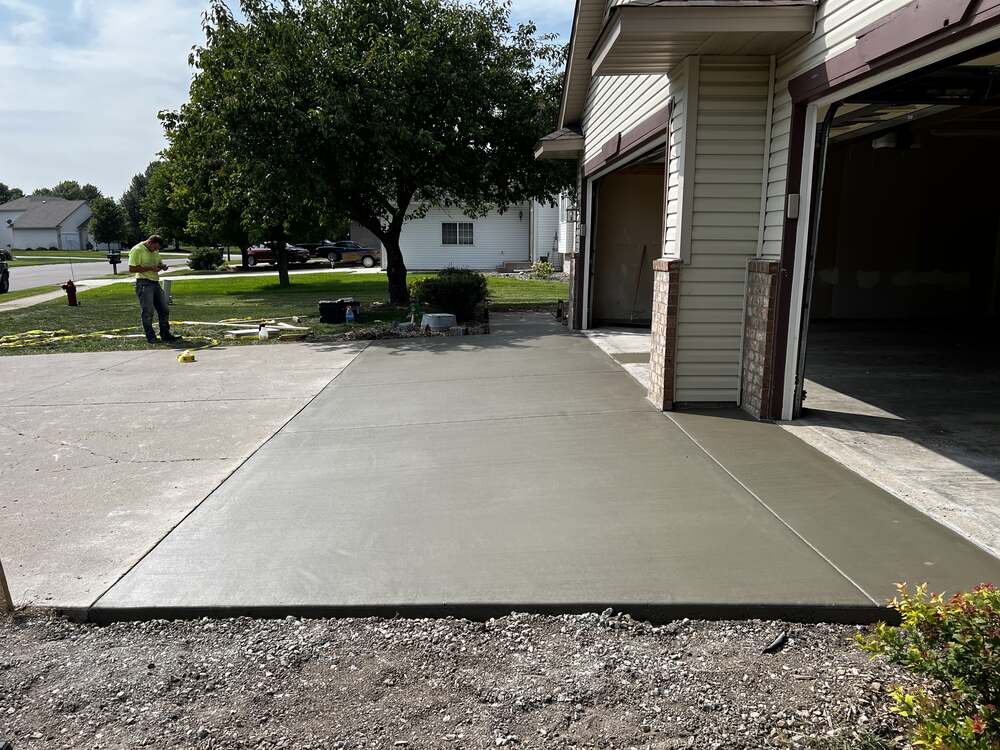
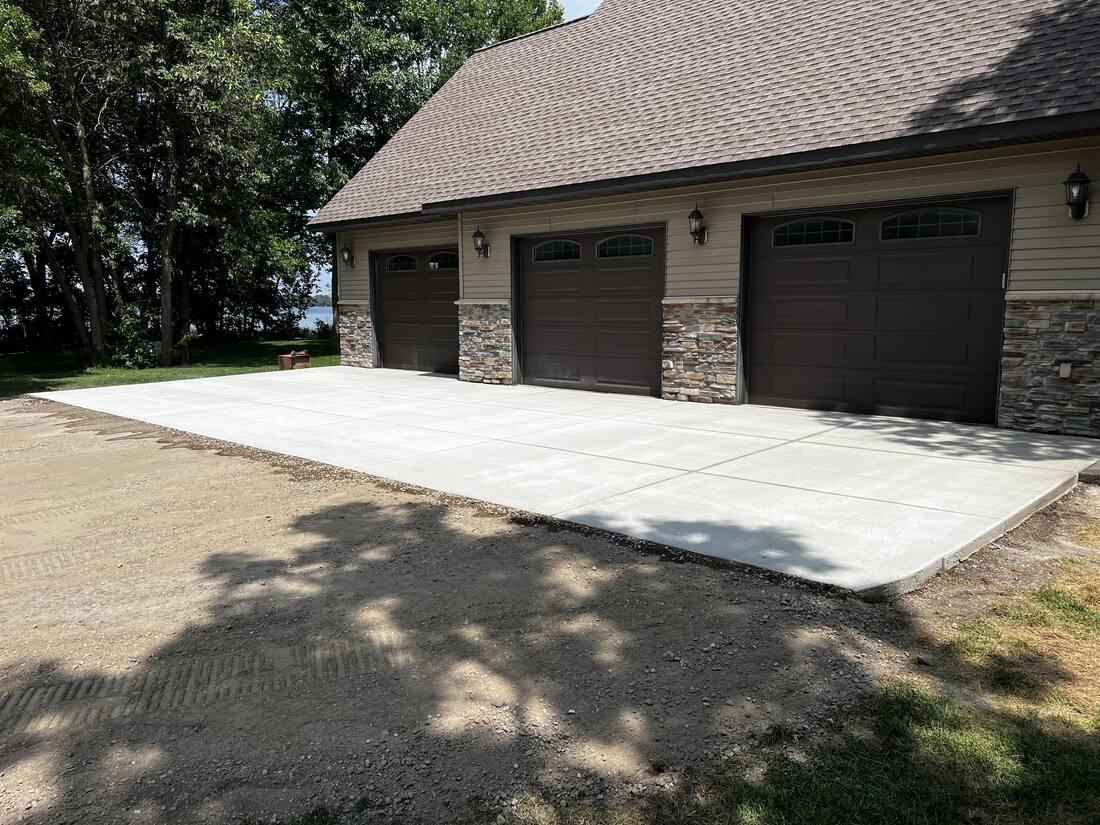
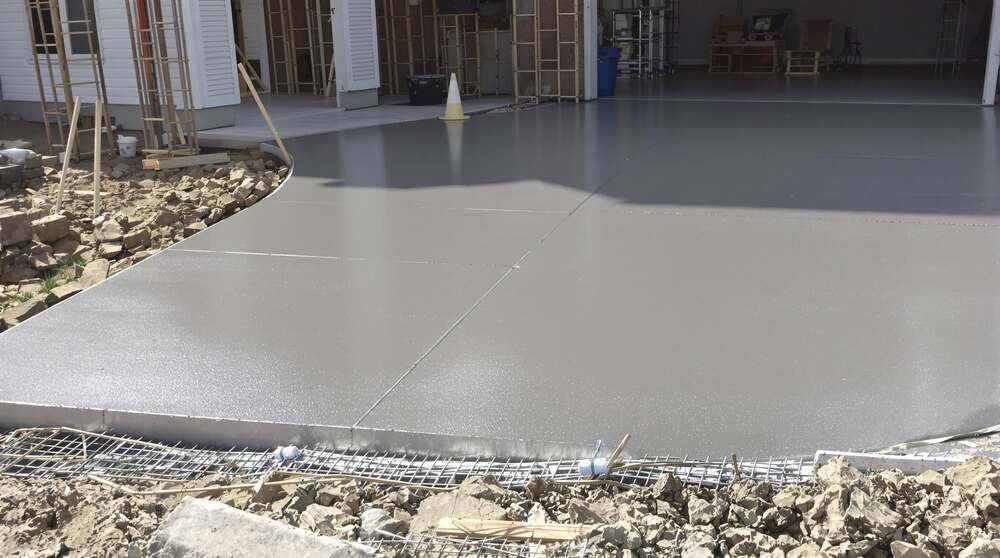
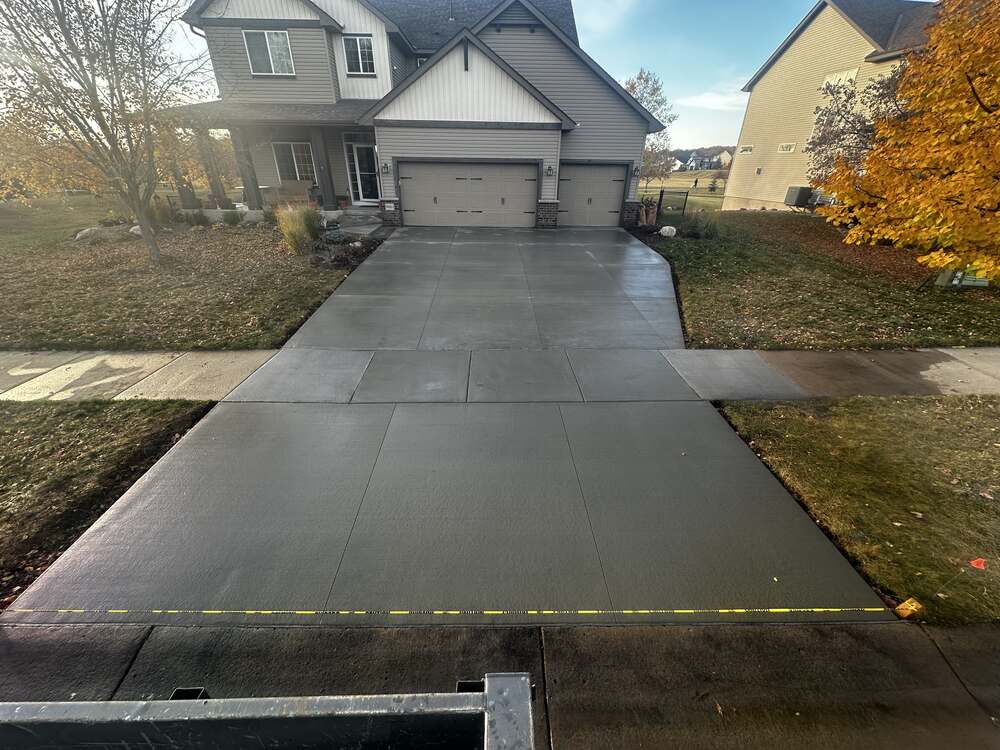
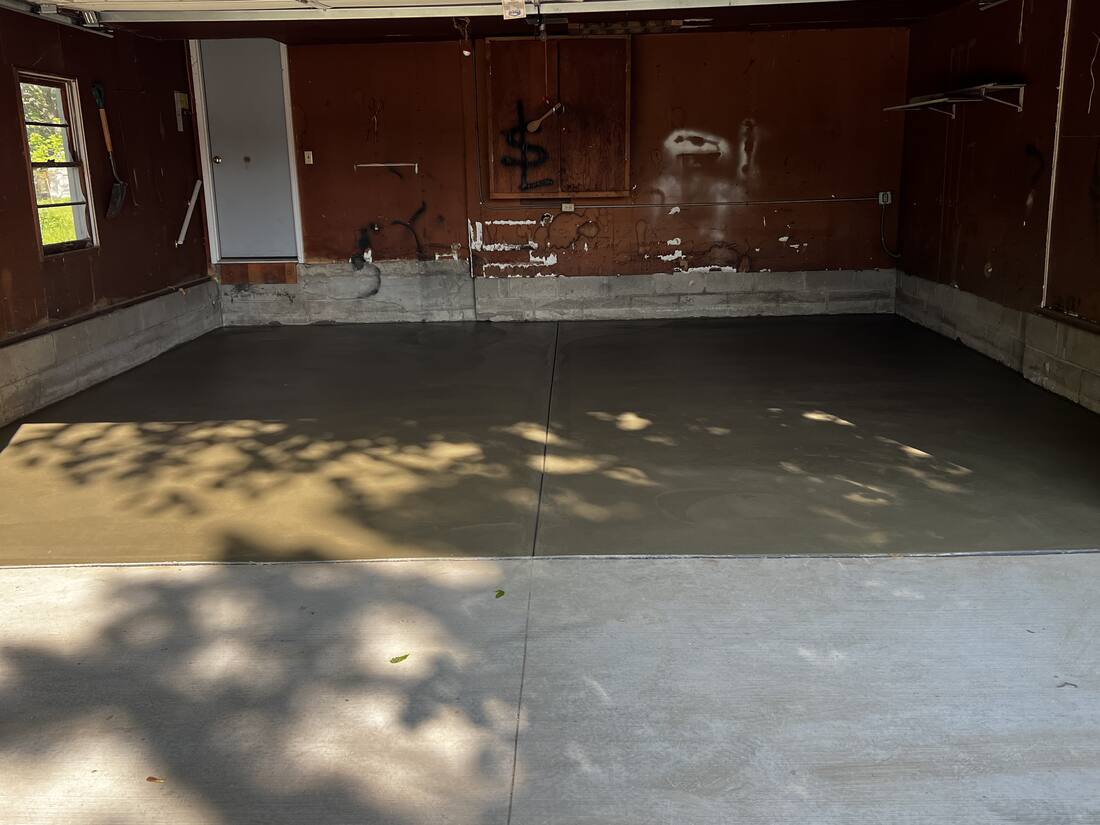
The apron is the transition slab directly in front of your garage door, typically two to six feet deep. It absorbs vehicle turning loads and controls whether water runs away from your garage or into it.
They sit over the garage excavation backfill line, which was rarely compacted properly, and they take concentrated turning loads daily. Poor base plus heavy use makes the apron the first section to settle.
Yes: apron-only replacement is common and cost-effective when the rest of the driveway is sound. We saw-cut clean lines and dowel the new apron into both adjacent slabs.
Better than before. We set the new apron elevation specifically so the door weather seal compresses correctly, restoring the seal is one of the main reasons homeowners call us.
Plan on no vehicle access for about eight to nine days: one to two days of work plus seven days of curing before vehicle traffic. Foot access to the garage remains available throughout.
Cost depends on apron size, demolition, base correction, and finish matching. Apron-only work runs a fraction of full driveway replacement. We provide free written estimates.
Garage Apron Installation available throughout the NW Minneapolis-Saint Paul Metro Area, including Maple Grove, Rogers, Plymouth, Brooklyn Park, Champlin, Osseo and surrounding communities.
We had a new patio installed by Erik & his team a few weeks ago & it is beautiful!! Much more than we envisioned it to be!! They were awesome to work with & we would most definitely recommend them!
Erik and his team did a phenomenal job on our driveway replacement. Great communication, always on time, reasonably priced, cleaned up after the project, and outstanding end result.
Free on-site estimates across the NW Minneapolis-Saint Paul Metro Area. Licensed & insured.
763-373-4763