Level, permanent bases for sheds and outbuildings.
Level, reinforced concrete pads that give your shed, workshop, or outbuilding a permanent foundation: sized right, drained right, and anchored to last.
A concrete pad outlasts every other shed base: no shifting blocks, no rotting timbers, no gravel washing out from under the corners.
Shed pads look like the simplest pour on the property, which is exactly why so many fail: dropped on uncompacted soil, poured thin, left flush with grade so water wicks into the structure above. Legacy Concrete General Services builds them like the small foundations they are: excavated to stable soil, compacted aggregate base, reinforcement through the slab, and a finished surface set above grade with pitch to drain.
Our licensed, bonded, and insured crews pour pads for garden sheds, yard barns, workshops, gazebos, and equipment storage across the metro, from tight backyard sites where every wheelbarrow counts to acreage pours with full truck access. We coordinate pad dimensions and anchor placement with your shed builder or kit specifications so delivery day goes smoothly.
You receive a written, itemized estimate and our 1-year written workmanship warranty. If your site or structure would be better served by a different approach (a thickened-edge slab for a larger outbuilding, or frost footings where code requires them) we quote what the project actually needs.
If a shed, workshop, or outbuilding is in your plans, our estimator will check the site, confirm dimensions against your structure, and quote the pad in writing.
Most shed pads excavate and pour in a single day, with the structure ready to set after seven days of curing.
ready-mix concrete batched to spec
high-strength mixes for small pads
fast-setting products for detail work
rebar and welded wire reinforcement
anchor bolts and shed tie-down hardware
curing compounds and joint materials
air-entraining admixtures
plate compactors for base preparation
screeds, floats, and finishing tools
penetrating sealers
Even a small pour deserves a safe site. We locate utilities through 811 before digging, keep excavations and fresh concrete barricaded, and finish every pad with the traction and anchorage that keep the structure above it standing through Minnesota weather. Your yard gets left clean, graded, and hazard-free.
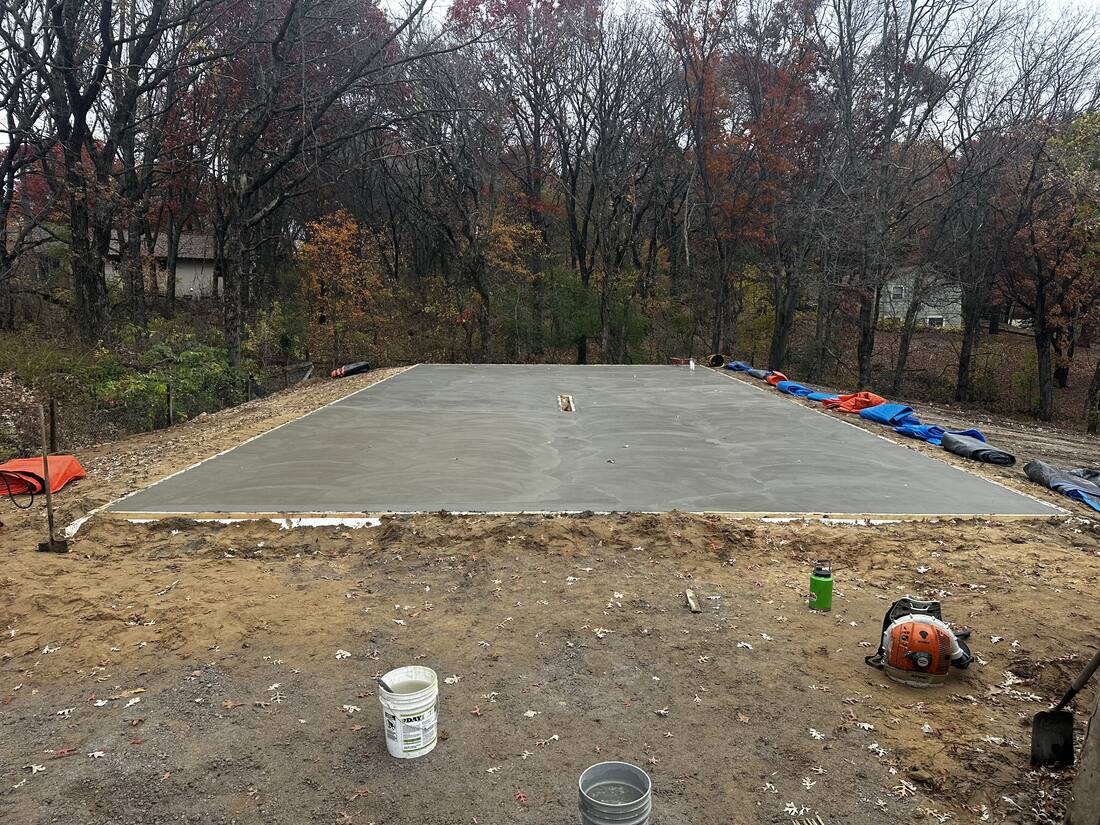
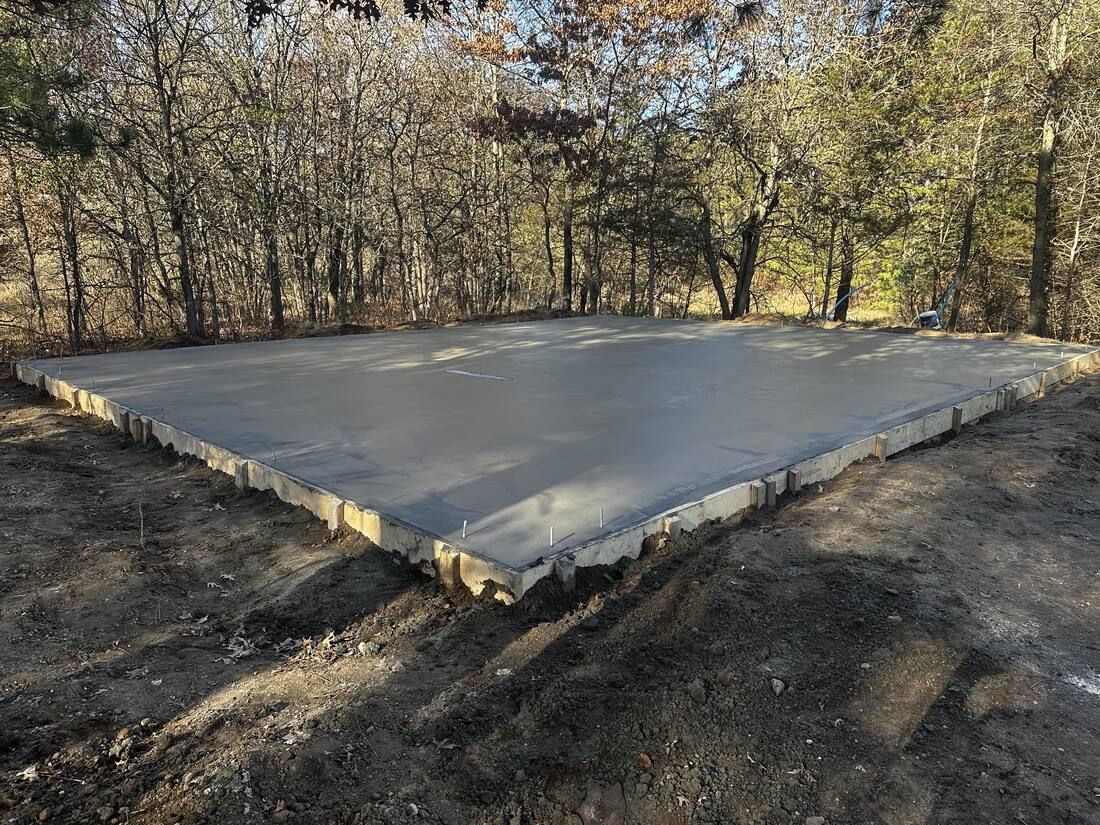
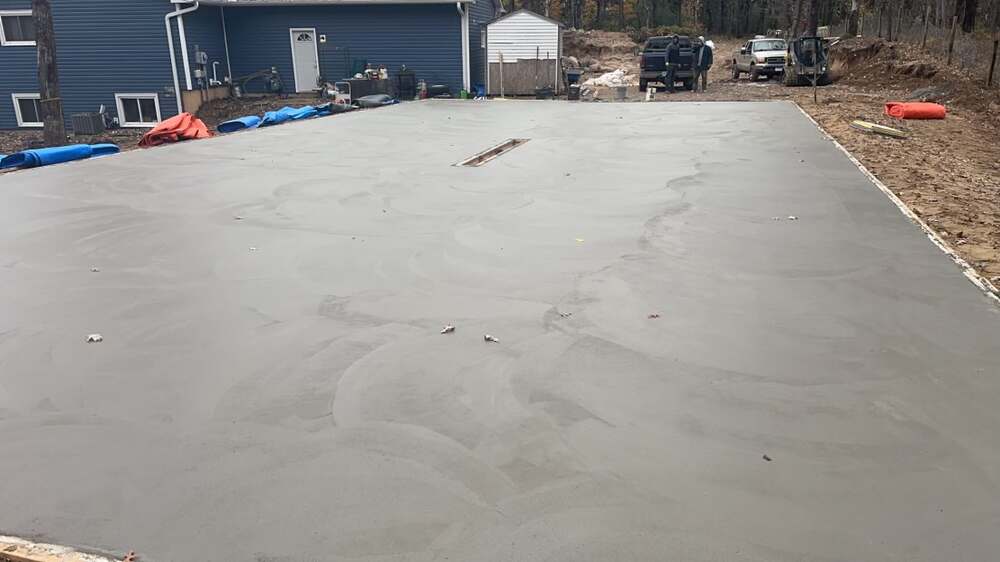
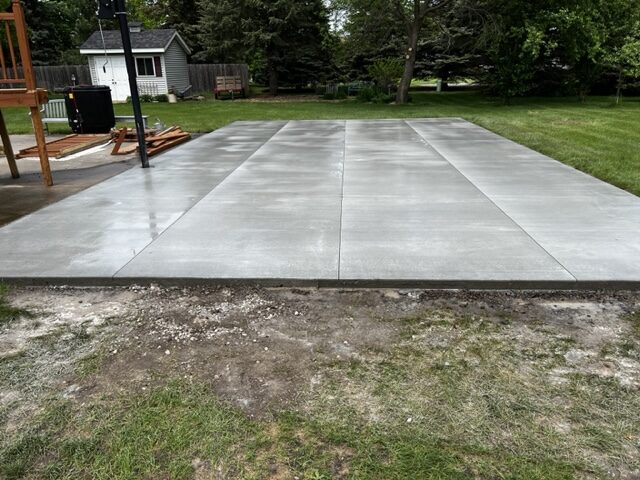
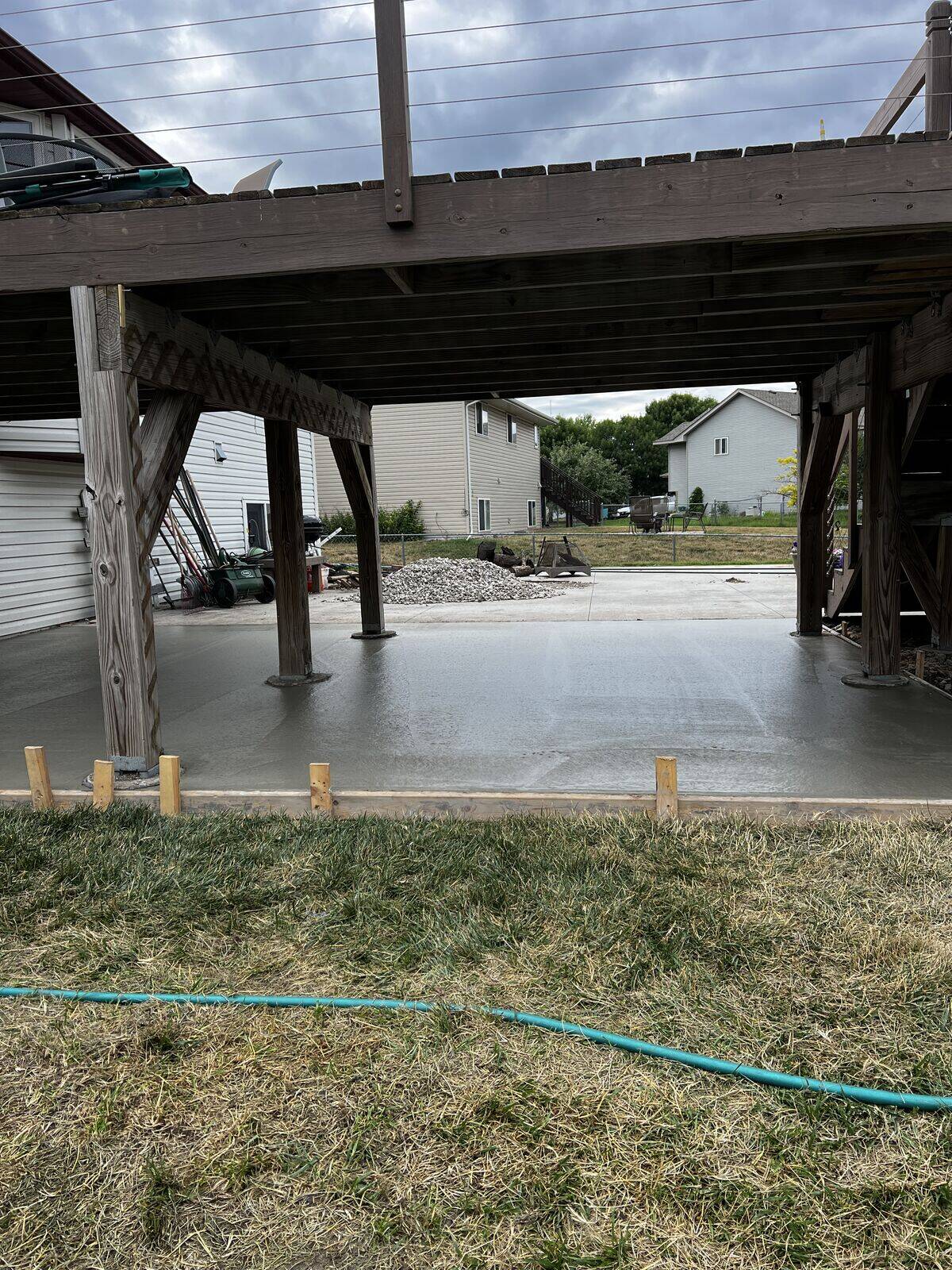
A concrete pad is the most durable shed base available: level, permanent, rodent-proof, and anchor-ready. Gravel and block bases cost less up front but settle, shift, and need re-leveling.
Four inches of reinforced concrete handles most sheds and stored equipment. Larger workshops and outbuildings may call for thicker slabs or thickened edges, which we spec during the estimate.
Typically the pad matches the shed footprint or extends an inch or two beyond it, so siding can overhang the edge and shed water. We confirm exact dimensions against your manufacturer specs.
Most detached sheds sit on floating pads, which is what municipalities generally allow for accessory structures. Larger outbuildings or attached structures may require frost footings; we verify your city’s code and build to it.
Plan on seven days of curing before the structure is set and anchored. We give you an exact timeline at the pour.
Cost depends on size, site access, excavation, and finish. Small garden-shed pads are among the most affordable pours we do; we provide free written estimates.
Shed Base & Pad Installation available throughout the NW Minneapolis-Saint Paul Metro Area, including Maple Grove, Rogers, Plymouth, Brooklyn Park, Champlin, Osseo and surrounding communities.
We had a new patio installed by Erik & his team a few weeks ago & it is beautiful!! Much more than we envisioned it to be!! They were awesome to work with & we would most definitely recommend them!
Erik and his team did a phenomenal job on our driveway replacement. Great communication, always on time, reasonably priced, cleaned up after the project, and outstanding end result.
Free on-site estimates across the NW Minneapolis-Saint Paul Metro Area. Licensed & insured.
763-373-4763